
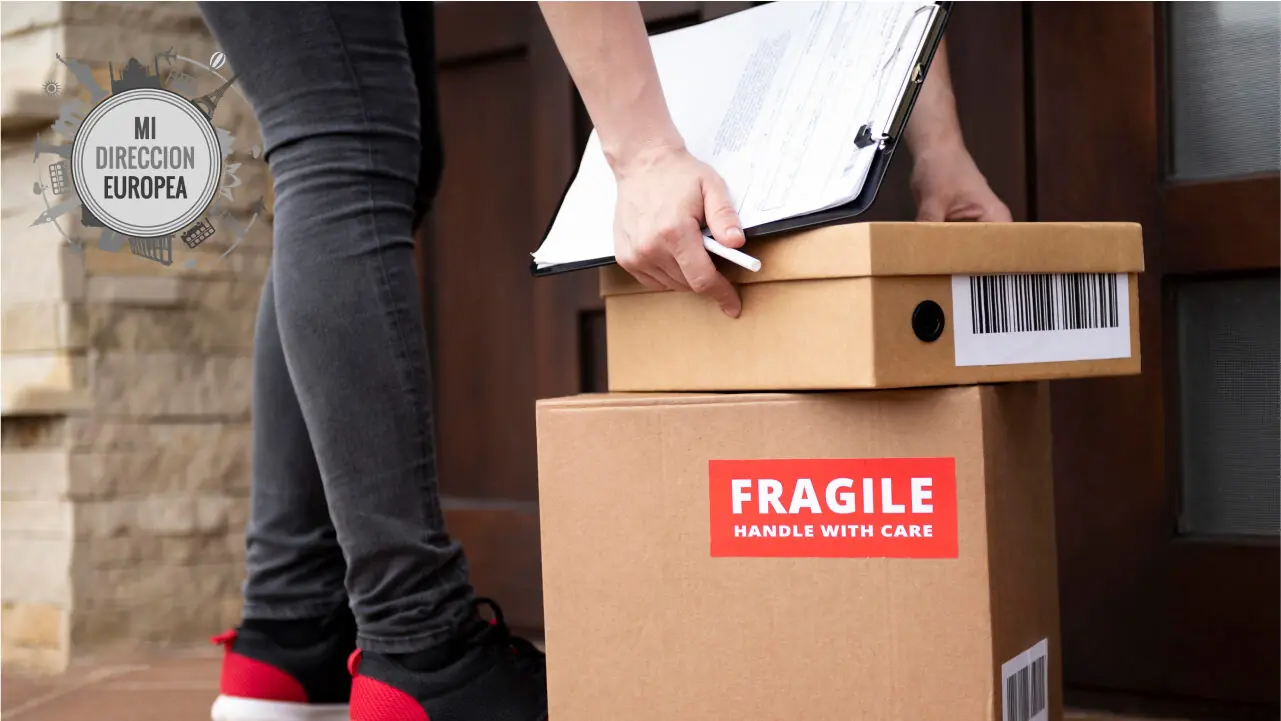
Changes in tariff policies worldwide are affecting the dynamics of international trade, creating challenges for sellers, buyers and logistics companies alike. In this context, services such as MDE play a key role as forwarders, facilitating international shipping without owning the merchandise. This distinction is crucial to understanding how tariffs impact each party involved in the process of buying and forwarding packages.
The international shipping circuit and tariffs
To better understand how tariffs affect air parcel shipments of up to 30 kg, it is essential to break down the roles of each party:
-
Local Seller (Retailer or Marketplace)
- This merchant sells the merchandise in its country of origin to a local or international customer.
- Handles delivery to an address within the same country (in this case, to an MDE warehouse if the buyer is abroad).
- Is not responsible for international shipping or for paying tariffs at the destination.
-
MDE (Forwarder / Reshipping Company)
- Receives the merchandise at its warehouse in Europe and processes it for international shipping.
- Does not own the merchandise; it simply acts as a logistics intermediary.
- Is responsible for generating the export documentation and choosing the best shipping option for the final destination.
- Is not responsible for paying import tariffs in the destination country, unless the customer requests a duties paid solution (Delivered Duty Paid, DDP).
-
Final Recipient (Buyer / International Customer / Receiving Company)
- May be the owner of the merchandise or simply the recipient (in the case of third-party purchases or shipments to a company's customers).
- Is responsible for paying the import tariffs in their country, according to local regulations.
- In some cases, delegates this payment to the courier company if the delivery option allows it (shipments with managed customs clearance).
Examples of real use cases and how tariffs impact them
Case 1: Individual buyer who uses MDE to ship personal purchases
Scenario:
Carlos lives in Argentina and wants to buy clothing from European brands that do not ship directly to his country. He uses MDE to receive his purchase in Spain and forward it to Buenos Aires.
Tariff Impact:
- Carlos pays for the purchase with local European taxes (VAT included in the store).
- MDE receives the package and forwards it to Argentina.
- Upon arrival at Argentine customs, the import tariff is calculated based on the declared value.
- Carlos must pay these taxes before receiving his package.
How to minimize costs:
- Consolidate several packages into a single shipment to reduce transport costs.
- Opt for a forwarding as a personal gift service, if the country's legislation allows it, to access tax exemption thresholds.
Case 2: European company that uses MDE to sell to international customers
Scenario:
An auto parts store in Germany receives orders from customers in Mexico, but does not handle shipments outside the European Union. The buyer in Mexico uses MDE as an intermediate address to receive the purchase and arrange the forwarding.
Tariff Impact:
- The German company sells tax-free (without VAT, because the sale is an export).
- MDE forwards the package to Mexico with customs documentation reflecting the value of the merchandise.
- Upon arrival in Mexico, the recipient pays the import tariff before receiving the merchandise.
How to minimize costs:
- Use a courier with simplified clearance that makes it easier to pay taxes in advance.
- Assess whether the declared value can be adjusted (within the law) to benefit from reduced tax thresholds.
Case 3: Dropshipping company that uses MDE to forward orders
Scenario:
A company in Chile sells tech products through its e-commerce store, but its supplier is in Europe and does not handle international shipping. To solve this, it uses MDE as a forwarding point.
Tariff Impact:
- The European supplier ships the merchandise to MDE with an invoice in the name of the Chilean company.
- MDE forwards the package to Chile, generating export documentation.
- At Chilean customs, the importing company must pay tariffs before collecting the package.
How to minimize costs:
- Register the company as an importer in Chile to access preferential tax rates.
- Use a forwarder with fast-clearance freight options to avoid additional costs from customs storage.
Frequently Asked Questions about paying tariffs on international shipments
1. Who pays the tariff on a shipment with MDE?
The final recipient (buyer or receiving company) is responsible for paying the import tariffs in their country.
2. Can the tariff be paid in advance?
Yes, in some cases you can opt for duties-paid shipping services (DDP), but this must be agreed with the forwarder and depends on the destination country's policies.
3. What happens if a package arrives and the tariffs are not paid?
If the recipient does not pay the required taxes, the package may be held at customs or returned to the sender.
4. Can the forwarder (MDE) be responsible for paying the tariffs?
No, since MDE does not own the merchandise and only acts as a logistics intermediary.
How to ship internationally without customs problems
Tariffs are part of global trade, but their impact can be minimized with strategic planning. By understanding the role of each party in the logistics chain (seller, forwarder and recipient), consumers and businesses can make informed decisions about the best shipping method.
To avoid extra costs or delays at customs, it is key to:
✅ Choose the right shipping mode (duties paid or not).
✅ Correctly declare the value of the merchandise.
✅ Plan package consolidations to reduce costs.
At MDE, we offer flexible solutions for forwarding international packages, ensuring that your purchases and shipments reach their destination without unnecessary complications. 🚀📦 Access exclusive products, save on your purchases and expand your possibilities no matter where you are. Plus, you get a 14-day trial with a money-back guarantee! Don't miss this golden opportunity to expand your shopping options. Join today!